Spain – Madrid – Part I (En)
Madrid, the capital of Spain is a city of elegant boulevards and large, well-kept parks such as Buen Retiro. It is famous for its rich deposits of European art. It is an open, cosmopolitan, dynamic and welcoming city.

Where to stay
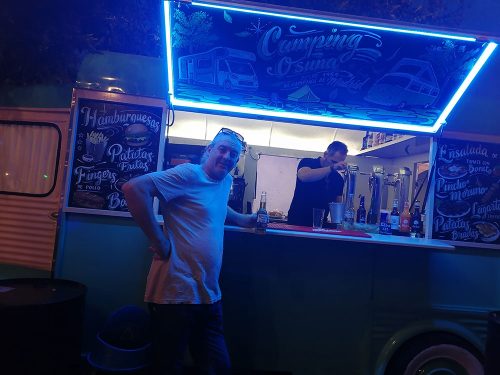
We stayed at Camping Osuna (40.453787, -3.60327 lat, long) the only one where you are close to a metro stop to go to the centre of Madrid. The metro stop is Canillejas, a 10-minute walk from the campsite. Camping is very expensive, 38 euros per day, including electricity. There is only one area with services, showers, washing machines, etc., so depending on where you park, it can take you quite far away. There may be a queue in the area for loading and emptying black and grey water. The pitches are good and in the shade. It has a shop where you can buy bread, etc., but quite expensive, and two adorable food trucks, with a huge terrace and music. It is really the only option to visit Madrid, although it seems very expensive to me, and we could not empty or fill the water due to the queue there was.


What to see
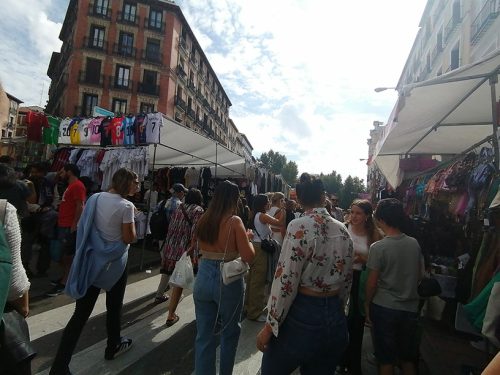
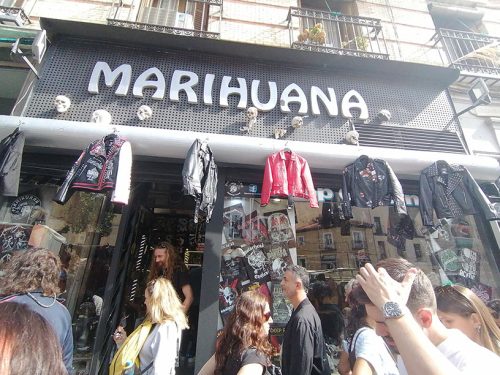
To know and see everything that Madrid offers takes several days, we visited it for two days and we were not able to see everything it offers. We took the metro and went to the La Latina stop, where we met our friends Fina and Rafa who were going to show us Madrid. The first thing we saw was El Rastro, the most traditional market in Madrid, which opens every Sunday. At the Rastro, you can find everything: clothes, music records, books, pans, antiques… and objects that you don’t know what they are or what they are used for. It is incredible to tour and see. If you don’t like crowds it can be a bit overwhelming.

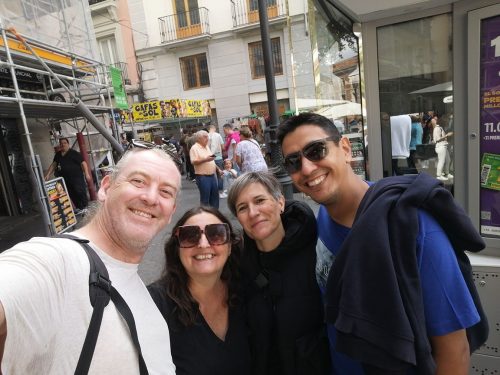
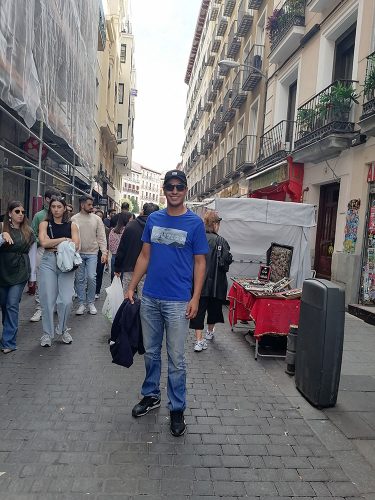
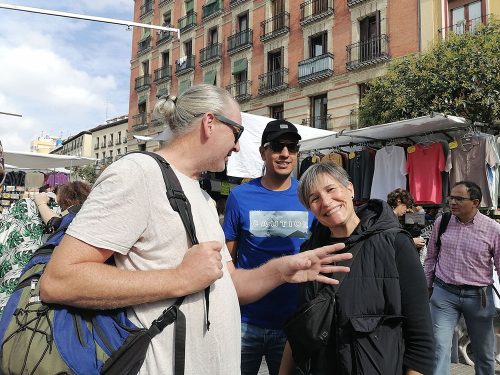



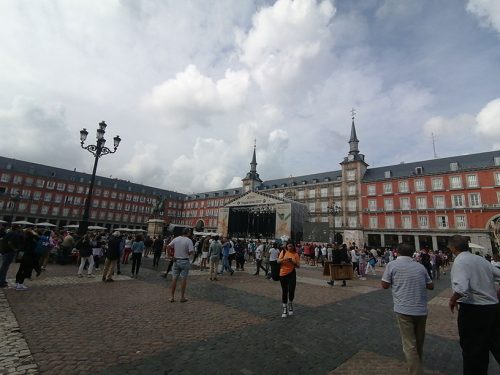
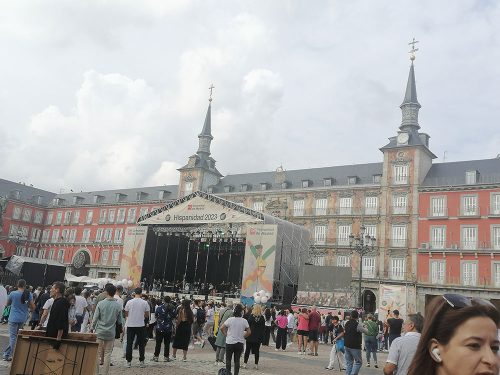
Then our friends took us strolling to the Mayor Square, a rectangular square 129 meters long and 94 meters wide, which is surrounded by important buildings such as the Casa de la Panadería, Arco de Cuchilleros and the Statue of Felipe III, a gift from the Duke of Florence. The square is surrounded by bars where they serve the famous squid sandwich. It turns out that it was Columbus Day and the square was full and there was a stage with bands playing. Ben wanted to try the calamari sandwich so we went to eat it outside the square where we could sit. It was great for 4 euros!





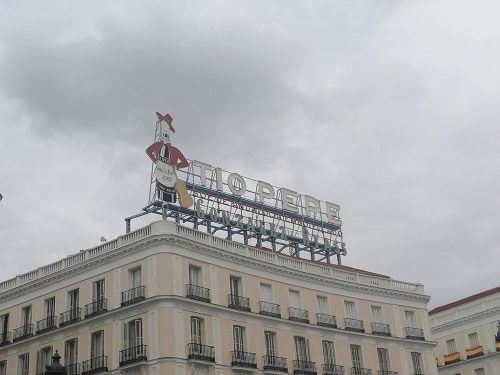
Then they took us to see the Puerta del Sol (the Sun Door) where the statue of the Bear and the Strawberry Tree (symbol of Madrid), the famous Tío Pepe advertising poster and the equestrian statue of Carlos III, located right in the centre, are located. The most emblematic place is the Casa de Correos (The post office), whose clock chimes the popular New Year’s chimes, and which has right next to it, a granite plaque that marks “kilometre 0” of Spain, surrounded by a large rose of the winds that includes the names of the provincial capitals and autonomous cities.


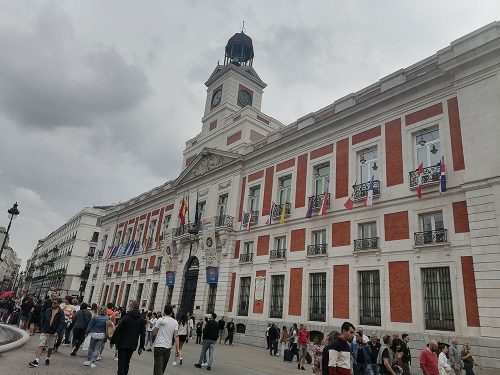
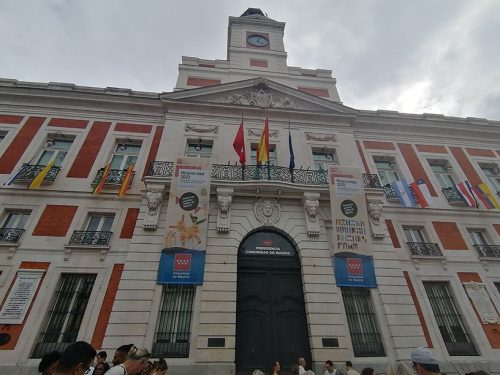
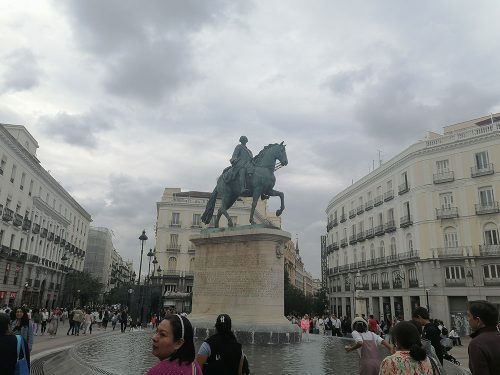

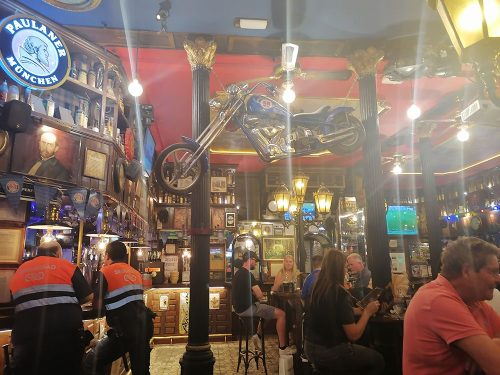
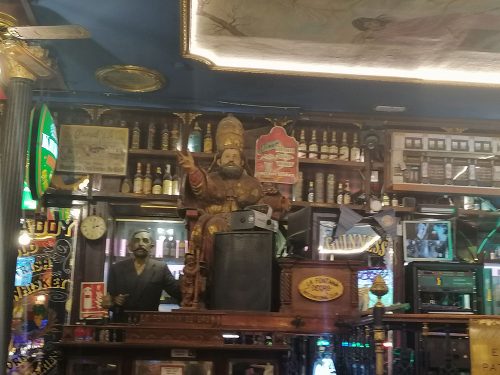
Then they took us walking through streets with very interesting and curious bars, crossing the Madrid of the Austrias, where a large part of the palaces and convents of the 17th century are preserved when Madrid became the seat of the Habsburg court until we arrived to the Congress with its famous lions on the door.



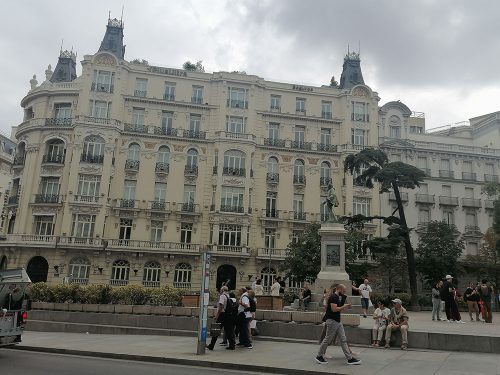

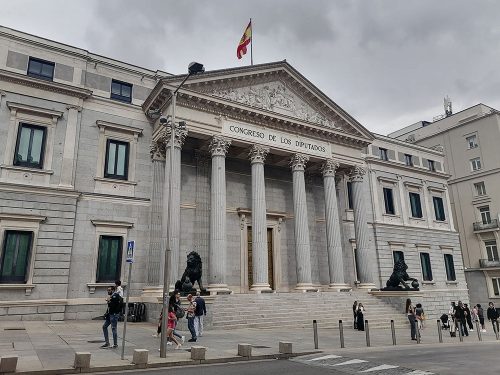
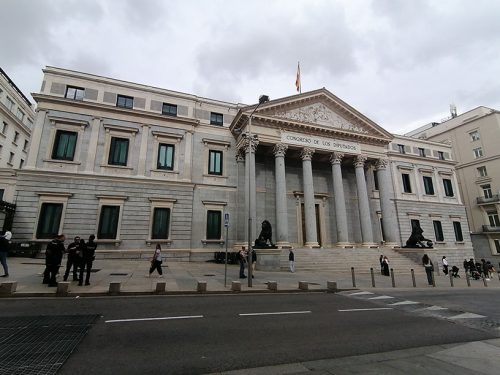

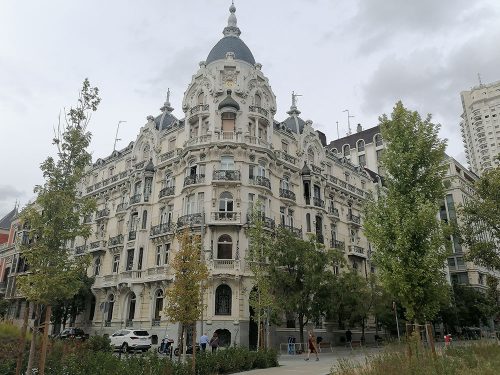
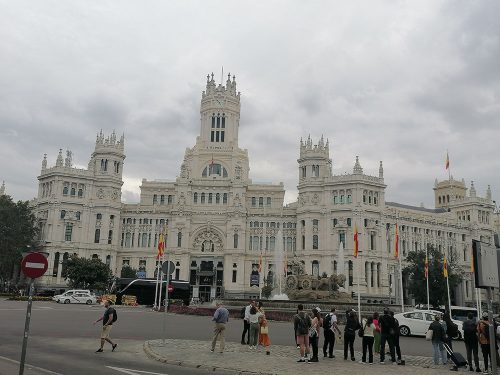
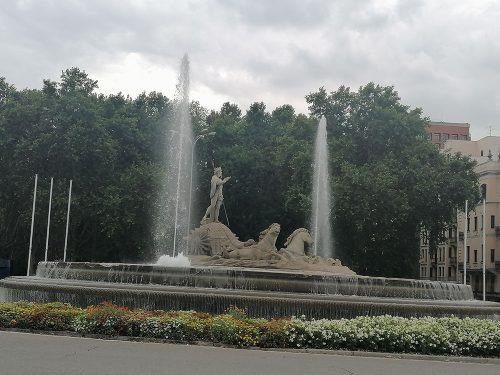
Then they took us to see the Neptune Fountain where Atlético Madrid celebrates its football victories, and the Cibeles Square, presided over by the Cibeles Fountain, the venue for Real Madrid’s titles. In this roundabout are the Buenavista Palace, which dates back to 1777, the Linares Palace, the Bank of Spain and, above all, the imposing Cibeles Palace, which houses the town hall. A few meters from Cibeles Square, going up Alcalá Street, you will reach the Alcalá Gate, the most famous of the five ancient royal gates that gave access to the city. This neoclassical-style door is shaped like a triumphal arch and presides over the Independence Square.



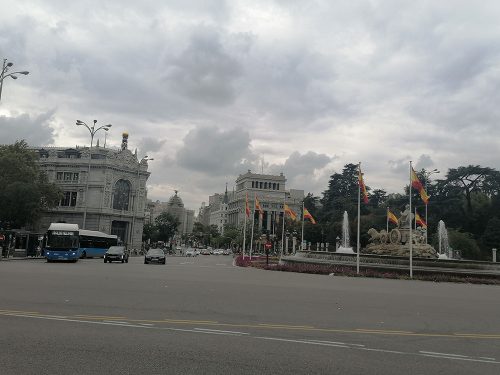
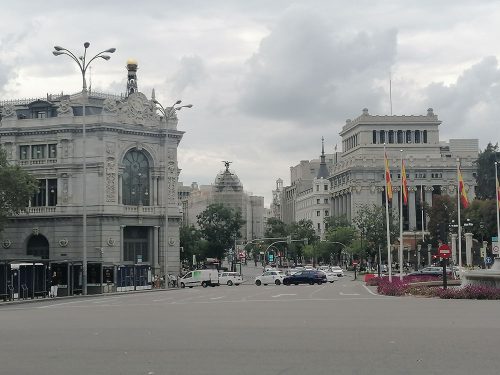


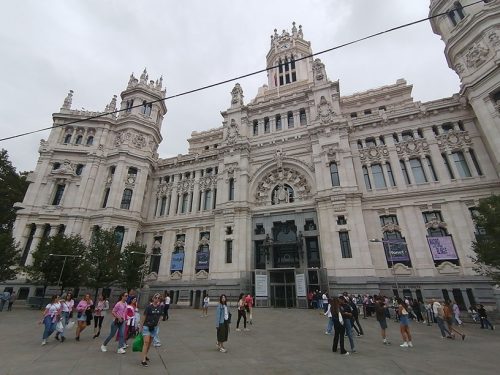


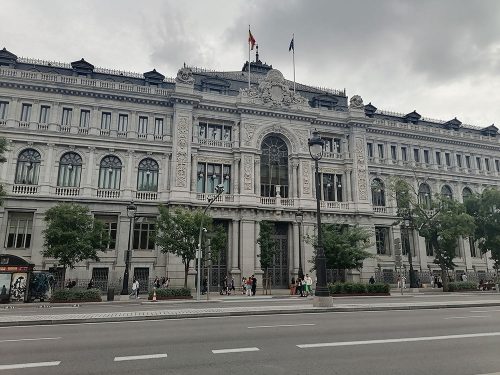


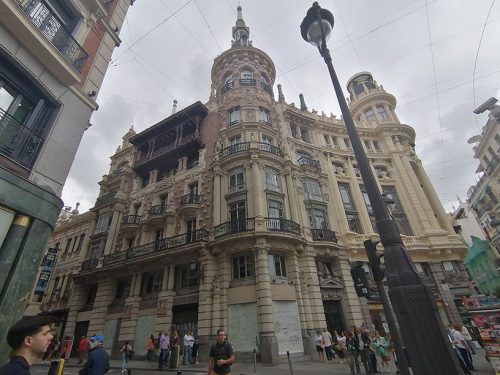
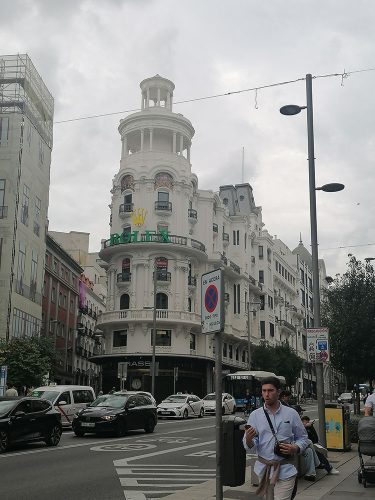
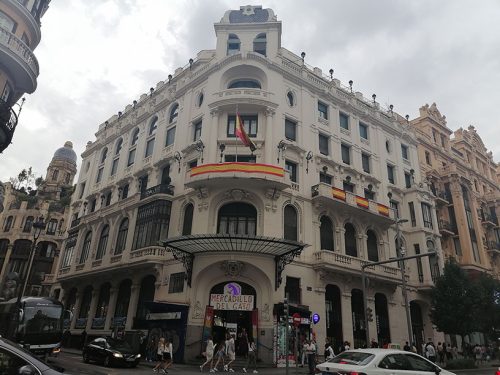
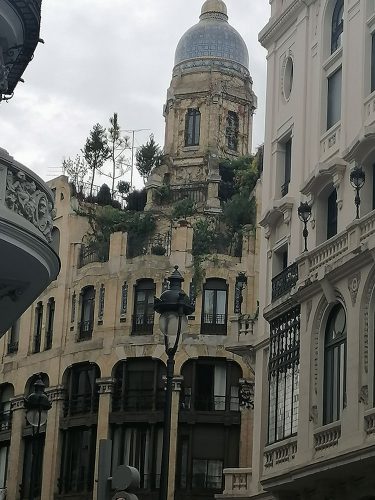
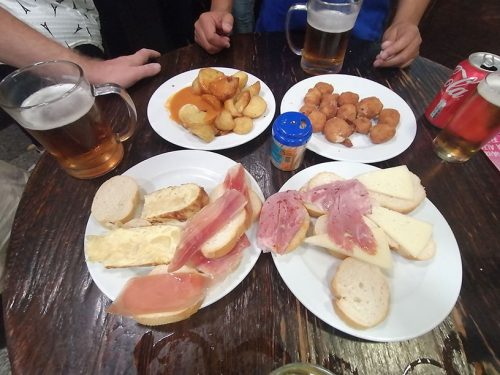
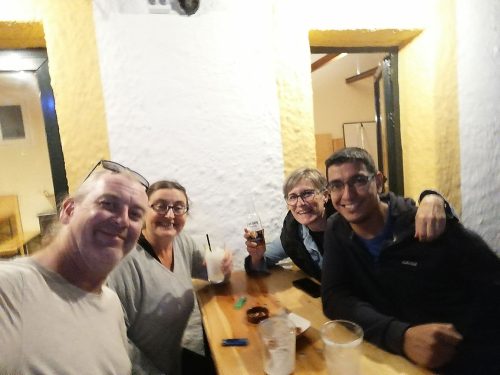
Then we toured more of Austria’s Madrid and Gran Via, which is the most famous street, whose construction dates back to the beginning of the 20th century, when large buildings such as Grassy, Telefónica or the Metrópolis Building were built. We stopped to have some drinks where they gave us free tapas, huge portions, so we already had dinner.


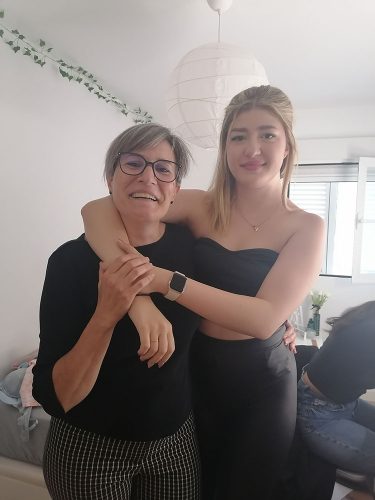
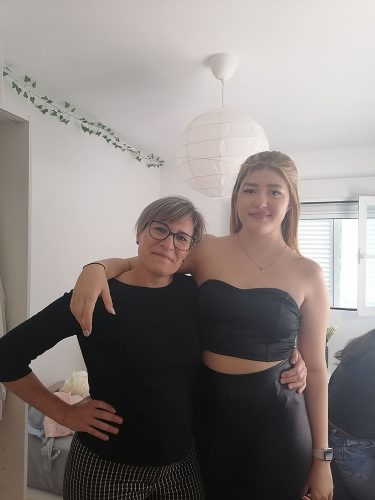
We finished our Sunday by taking the bus to Fina’s house, where we saw her daughters, and we got in the car and were taken back to the campsite, where we had a few last drinks at the bar. Many thanks to Fina and Rafa for their great guided tour of Madrid!


The next day, Monday, we returned to Madrid where we met my friend Elvira, daughter of my godfather, which you can see in part II.


Madrid looks great!