SPAIN – Pamplona (En)
Pamplona is the capital of Navarre province in northern Spain. It’s best known for the Running of the Bulls (Feast of San Fermín) in July. During this legendary multiday festival, daredevil runners lead bulls through the city streets. A major stop along the Camino de Santiago, Pamplona is also home to Gothic-style churches including fortresses like San Nicolás.
Where to stay
We stayed at the motorhome area of the city (42.8209, -1.6564 lat, long) which is 800 metres from the old town and next to a petrol station. It costs 10 euros daily and includes emptying and filling of black and grey water and electricity. You can only stay 48 hours to make way for other caravans. I recommend arriving early in the morning, as it gets crowded by midday. Its location is great, in 5 minutes you are in the old town, it is surrounded by parks to walk the dog, with a little train for children and if you cross you find areas with tapas bars and supermarkets. I recommend it to visit this beautiful city.


What to see
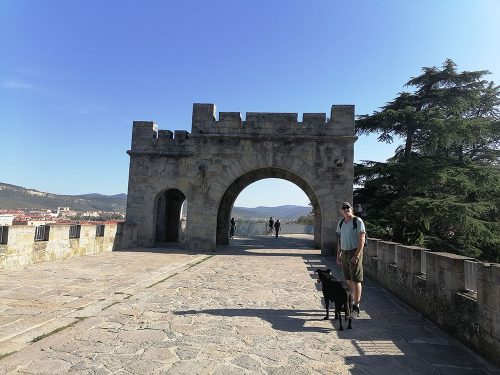
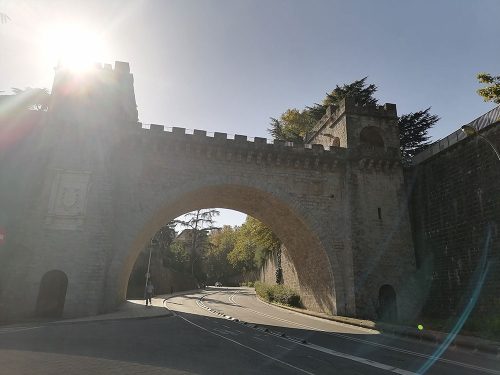
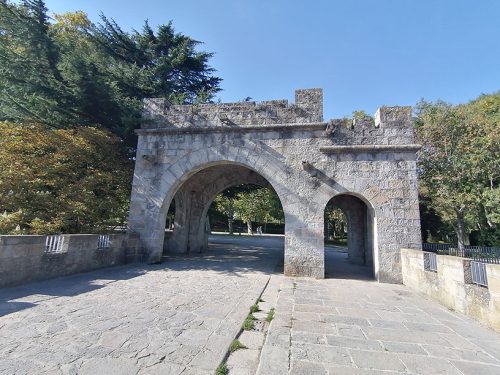
With a cosmopolitan atmosphere thanks to the Camino de Santiago, in addition to being fun, it has a multitude of green areas, an exciting history, culture, monuments, colourful houses, and a pleasant pedestrian historic centre full of bars with pinches. We walked to the old town with Asha, and the first thing we found was an arch to enter the old town and the walls. The inner walls were demolished; However, part of the outer perimeter of a large peripheral wall from the 16th century remains, along which you can walk.

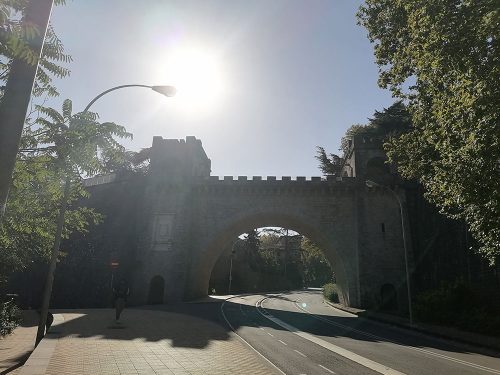


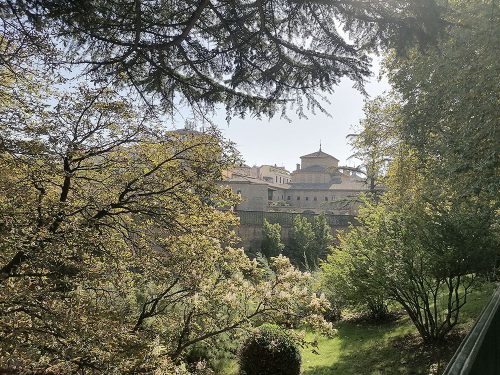

The next thing you find is the Taconera Garden, created almost 200 years ago in the French romantic style, it is the oldest in the city, with sculptures by the Navarrese tenor Julián Gayarre and Mariblanca, figures very loved by the people of Pamplona.
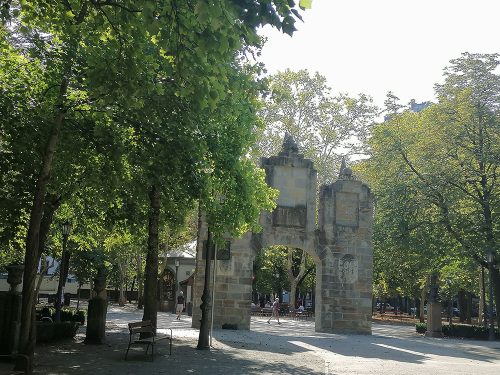
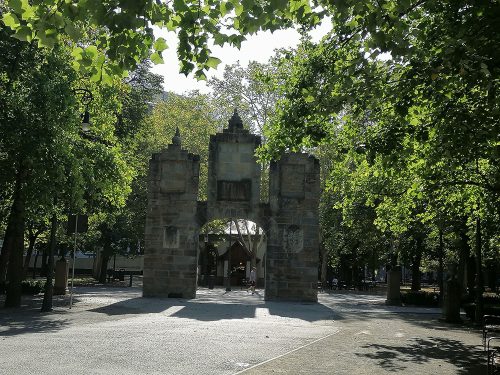

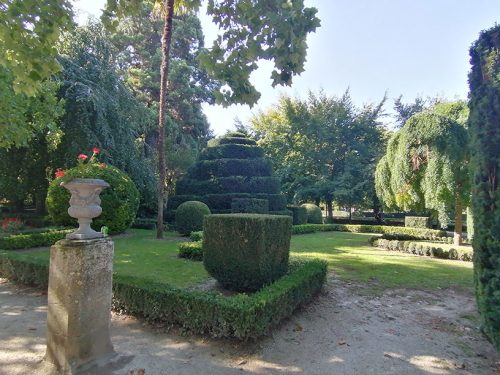

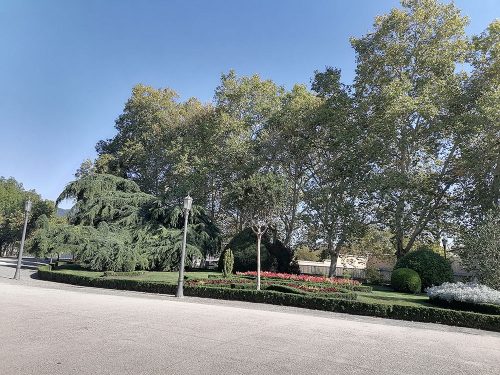
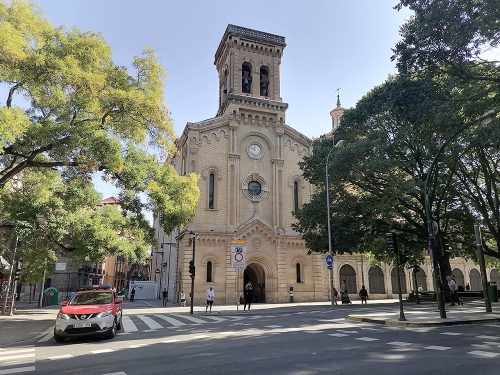
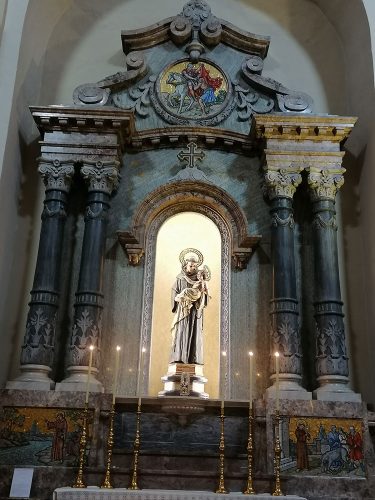
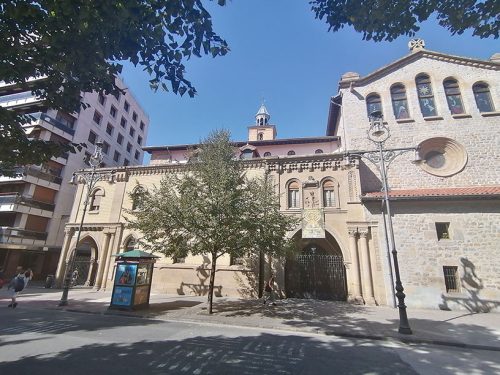
Right in front of the garden, you find the Church of San Lorenzo, from which the San Fermín procession begins every July 7, as it is the one that keeps the carving of the saint, and here all the official religious events take place during the festivals. It was open so we could go in and see it.

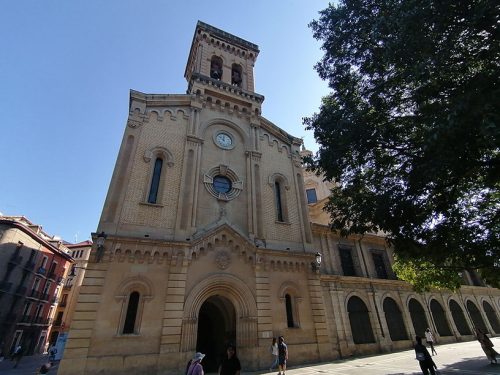
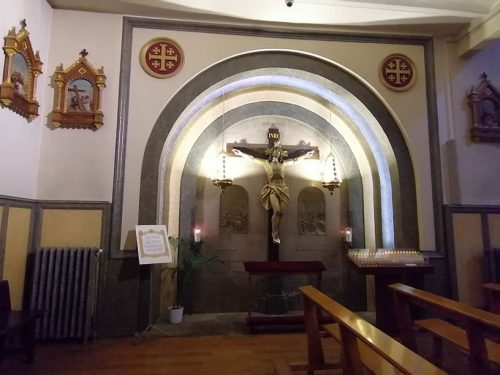
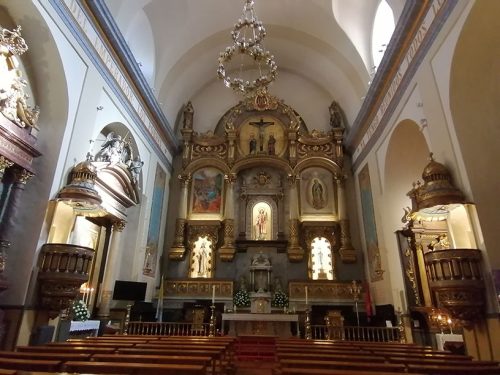
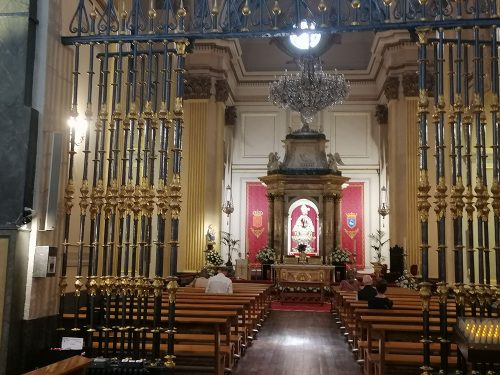
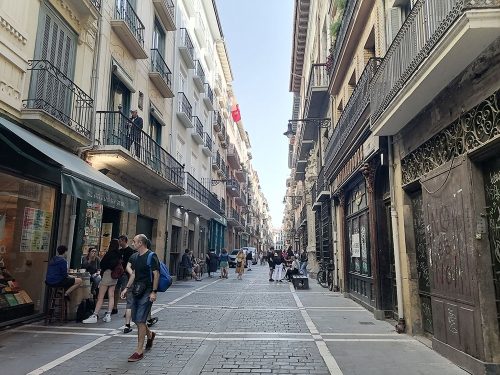
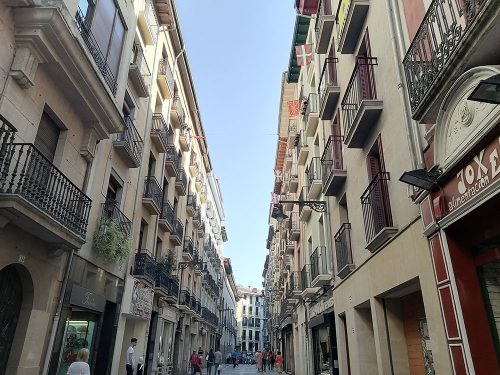
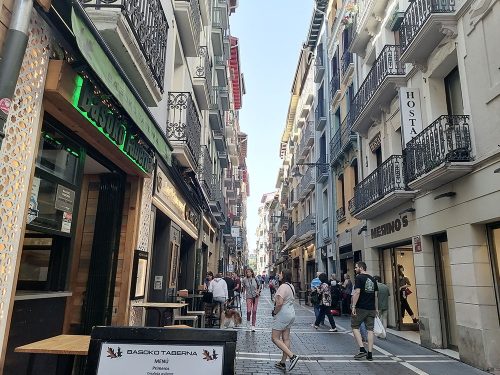
Then we walked through the pedestrian streets full of bars with pinches and menus of the day, super lively, until we reached a square where the Chamber of Comptos was located, created in 1365 by Charles II, and which is in charge of the administration of the Royal Heritage and Finance. In the same square is the San Francisco Public Library.
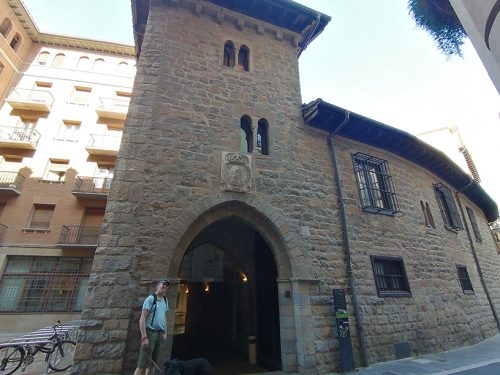

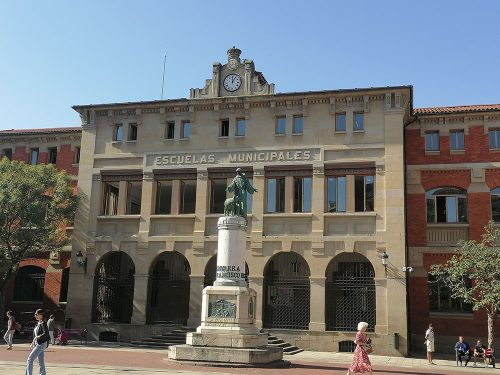
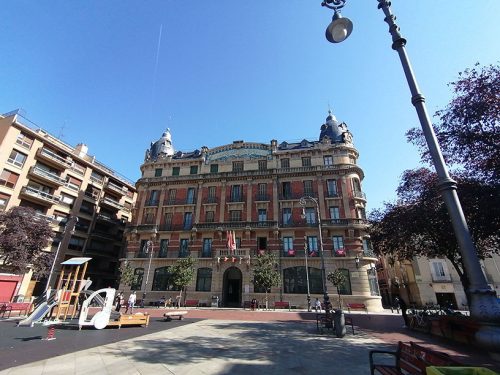


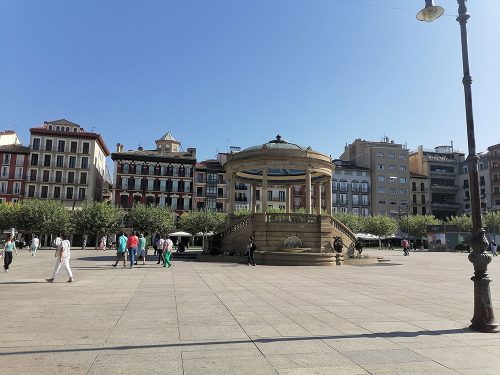
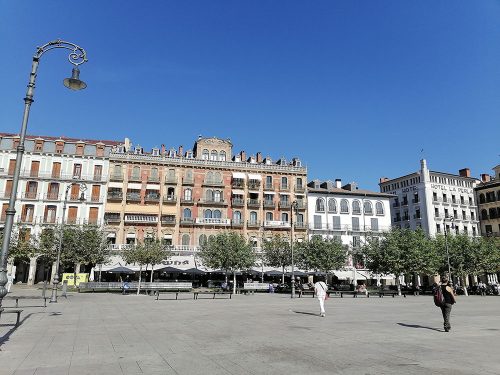
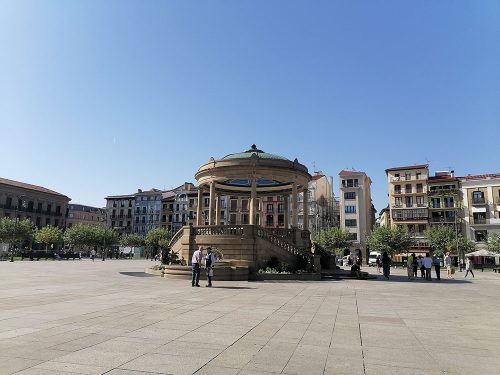
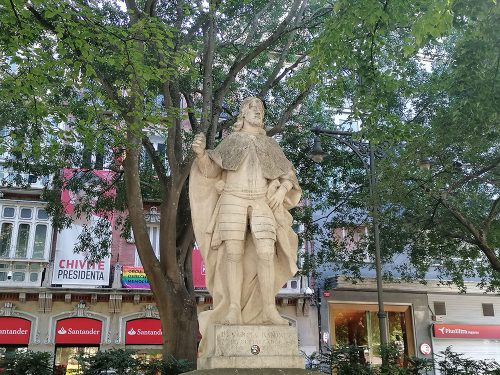
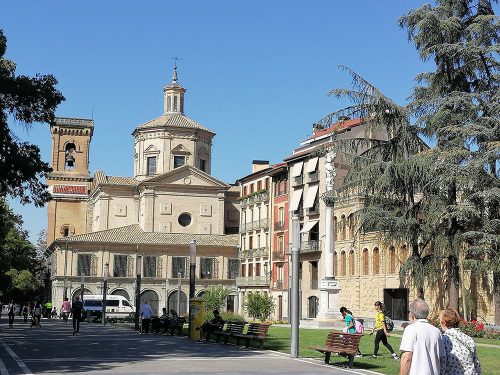
The next thing we saw was Castle Square, a large rectangular square, measuring no less than 14 thousand square meters. Its name comes from the two castles that existed in this place, before being demolished and this space converted into a large esplanade where markets and popular festivals are held. In the centre, there is a bandstand, on the sides, under the watchful eye of the statue of Charles III, splendid buildings from the 18th century.
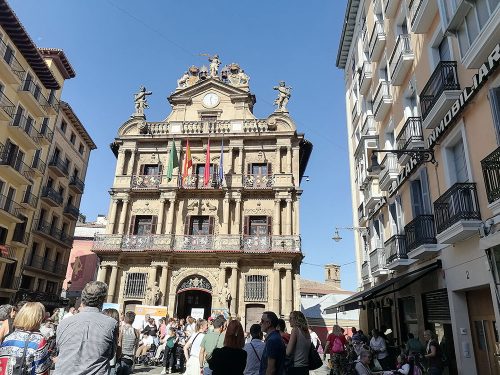
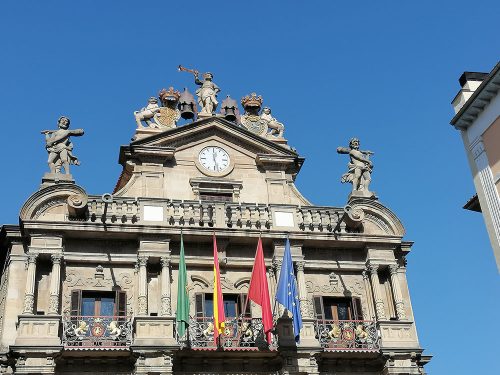
After that, we went to see the Town Hall, whose baroque façade is the emblem of the city. The statues are allegories of the meaning of this building, Hercules with a club, since the function of the City Hall is to maintain peace. The silver lion or Prudence and Justice guarding the entrance on each side.


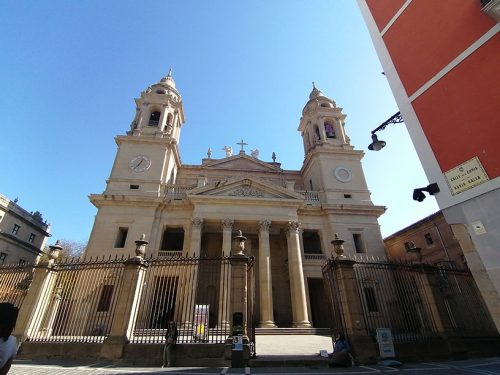
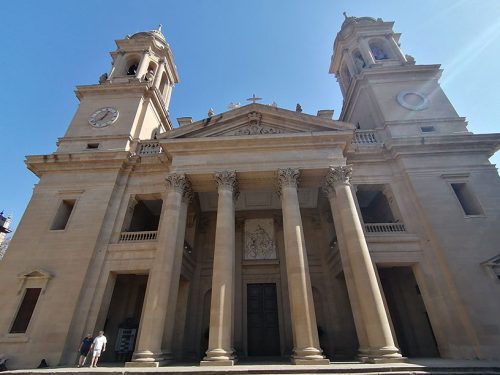
Then we went to see the Cathedral of Santa María la Real, which was built during the 14th and 15th centuries on the remains of a Romanesque temple. The neoclassical façade from 1799 is by Ventura Rodriguez and the interior is French Gothic. We couldn’t see the inside because it was already closed. In a side alley, you find the Church of San Agustín, where the poet Garcilaso de la Vega was knighted in 1523.


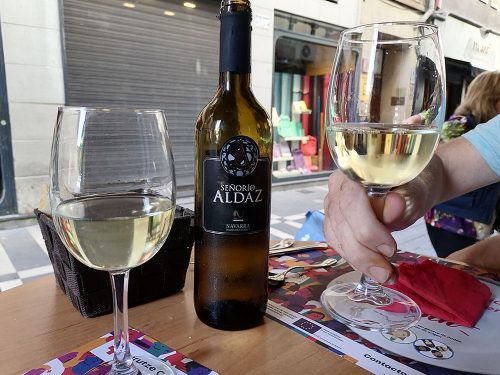
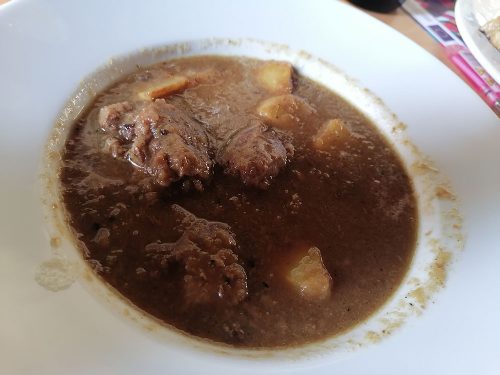
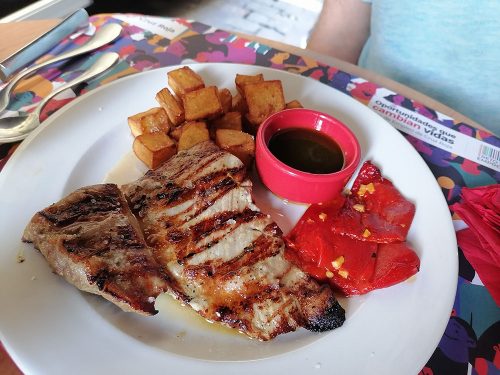
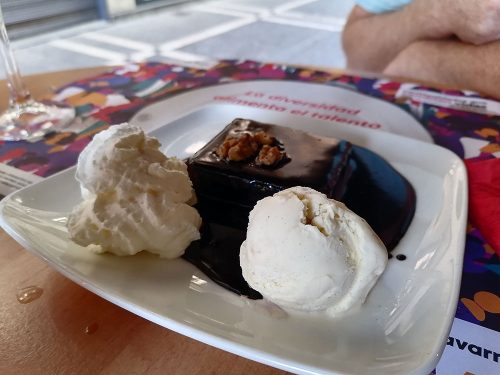
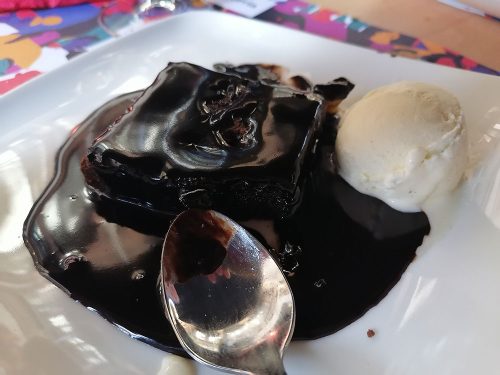
We decided to go for lunch, we went to a restaurant that had a menu of the day that included a drink, starter, main course and dessert. For drink we ordered a bottle of white wine from Navarra that was very good, and for starter, I ordered seafood fideuá with aioli, delicious, and Ben decided to try the pochas with piparra, which is white beans with chilli peppers. For the second we shared cheeks and Iberian secret, the secret was delicious! All for 17 euros each. For dessert we ordered a brownie with ice cream and Ben’s with cream too, we ended up very full!



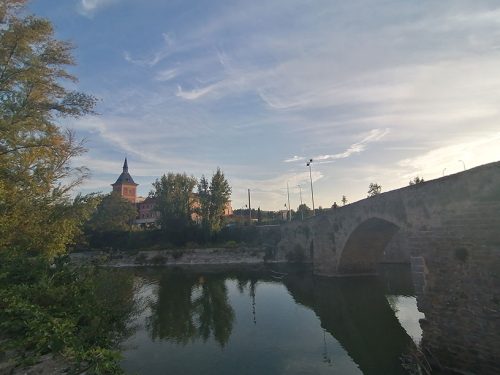
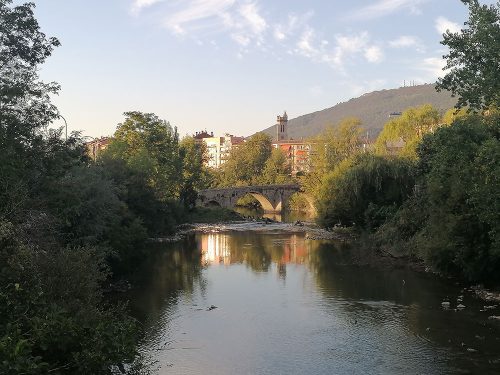
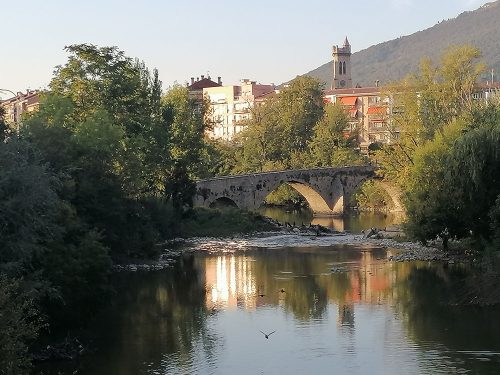
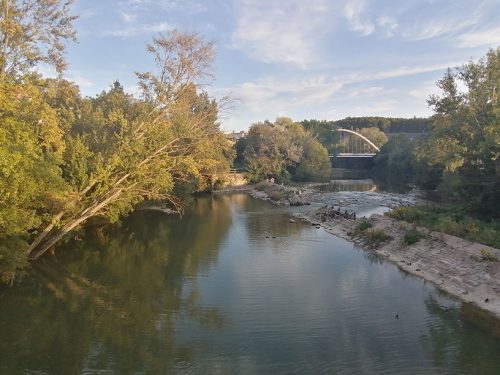
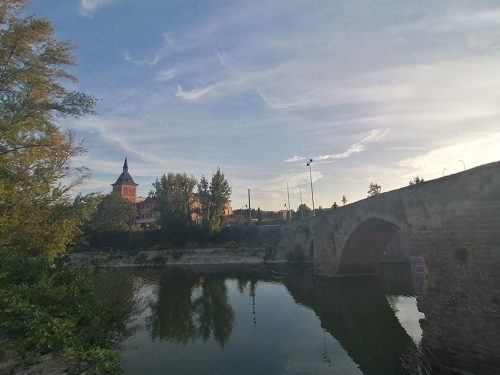
After lunch, we went to see the rest of Pamplona, and we saw the Gothic-style Church of San Saturnino, built on an old Romanesque chapel destroyed during the wars between the medieval towns. The porch is from the 13th century and the two Clock and Bell Towers have survived from medieval times. We finish our tour walking along the banks of the Arga River with sculptures on the venue and where the Santa Engracia Bridge is located, a typical Gothic bridge with three different pointed arches, supported by robust breakwaters and has a dromedary back. The bridge has this name due to its proximity to the Poor Clares convent.








We left Pamplona and went to Burgos in the Community of Castilla y León, characterized by its intact medieval architecture and famous for its French Gothic Cathedral of Santa María where is the tomb of El Cid, which you can see in the next post!

