France – Port-Louis (En)
Port-Louis is famous for its citadel, which watches over the city and the waters of the Bay of Lorient. Behind the walls, untouched by cannons and time, you can see the picturesque fishing port. The Spanish erected the first elements of the citadel in 1590. Louis XIII completed the fortifications in 1637 and named the city Port-Louis. Chosen as the headquarters of the East India Company, Port-Louis prospered from the spice trade. When the East India Company moved to Lorient, the city was dedicated to fishing and tourism.


Where to stay
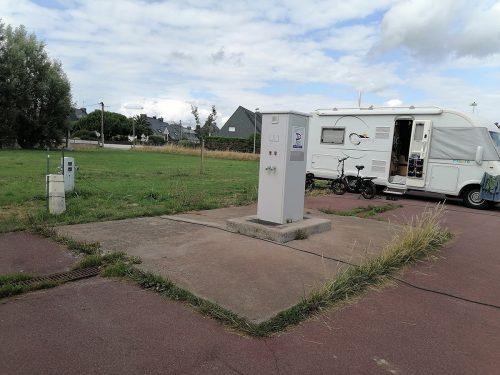
We stayed in the Camping Car area for motorhomes (47.708801, -3.34342 lat, long). Camping cars are areas for motorhomes in several European countries (although they originated in France), and are now also starting to appear in Spain. You purchase a membership card and make a deposit. Prices vary depending on the season; here we paid €14.80 per day. The areas have electricity, drinking water, and drainage for grey and black water, as well as free Wi-Fi. If there’s space, you can open the porch and set up chairs and a table outside. This area is super nice, as it’s across from the beach and a 10-minute walk from the citadel and the centre. There are other camping cars and a campsite in the village, but this one is the best; we recommend it!



What to see
We walked along the beach toward the citadel. The first thing we saw was a bastion called Le Papegaut, dating from 1575, which allowed us to watch over Locmalo Bay and the Gavres Peninsula.


We continue walking until we reach the Sardiniere Gate. This gate once had an arch. It was enlarged at the beginning of the 20th century to facilitate access to the canneries located within the walls. The causeway leading down to the sea is the first landing stage, built in 1851. We enter through the gate and follow the beach along the walls.
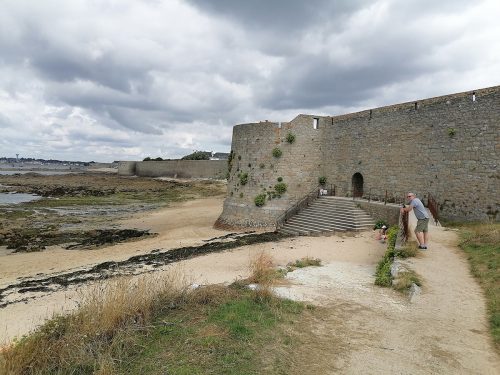


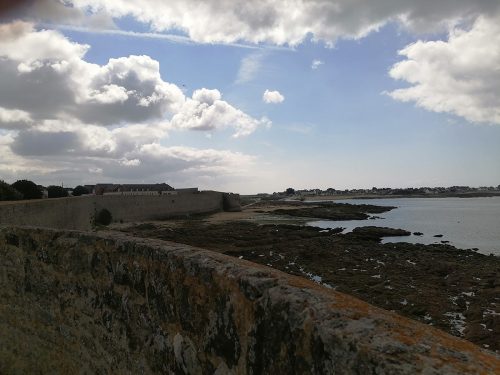


We arrive at the citadel, which now houses a museum that tells the fascinating history of the East India Company, founded in 1664 by Colbert. The citadel still preserves two Spanish-style bastions. To access it, cross a small bridge and the ravelin, a triangular fortification. The silent cannons still point toward Groix Island.


From the citadel, there are impressive views of the fishing port and the city.


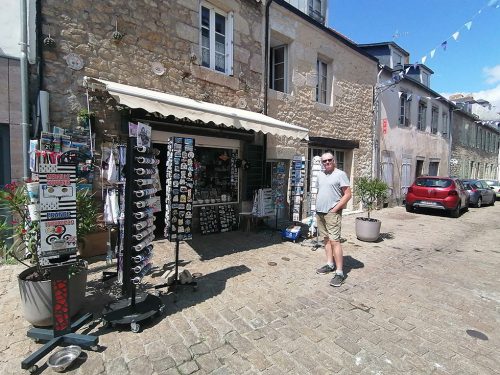
We then went to see the city centre, which has shops and restaurants very cute, and we saw the Notre-Dame Church from 1657, the town hall, the Chapel of Saint Pierre from 1553, and the tourist office, which is located in a house built in 1884.



What to eat
The typical dishes here are oysters, wild shrimp, and cockles. At a beach bar, Ben tried the oysters, and I tried the shrimp. Oysters are super cheap in this part of France, and we paid €20 for everything, including drinks.


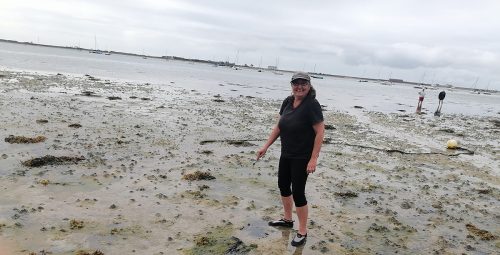
On the beach in front of our parking lot, we saw people picking something, and they told us they were picking cockles, as the low tide is impressive and you can pick tons of them. We went the next day to pick cockles for our lunch. It was the first time Ben and I had ever picked cockles. You use a small rake to scoop them out, but since we didn’t have any, we used forks and found a bunch, which Ben cooked, and they were delicious! They sell for over 12 euros a kilo in supermarkets.




We left Port-Louis and headed to Concarneau, a city with two parts: the modern city on the mainland and the medieval, a walled city on a long island in the centre of the harbour. You’ll be able to see both in the next blog!

