Spain – Castilla y León – Segovia (En)
We arrived in Segovia and we stayed in the municipal motorhome area, free and next to the Bull ring (40.940706, -4.107896 lat, long), with services for filling and emptying water. On Saturdays, there is a street market in the area. 10 minutes walking to the city centre. Thank you to the city for providing us with a motorhome area.
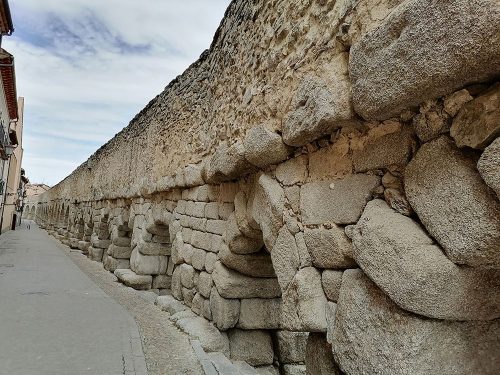
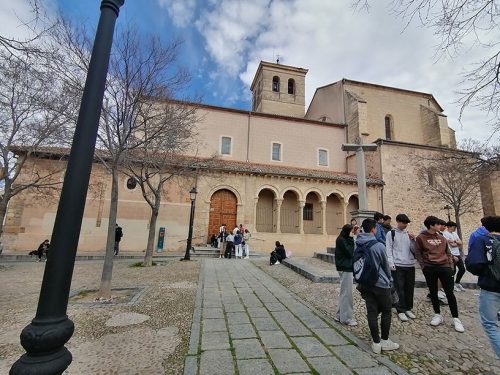
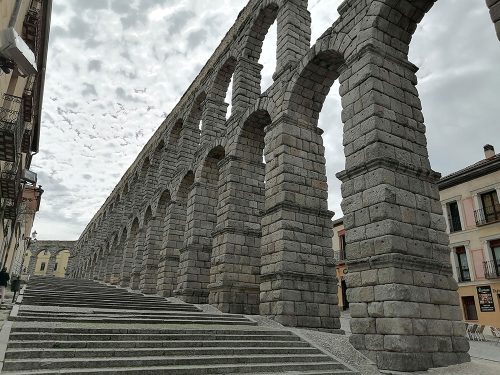
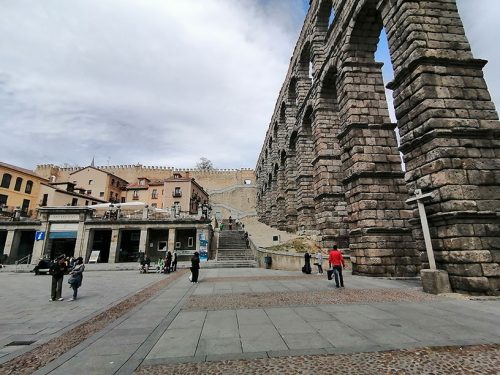
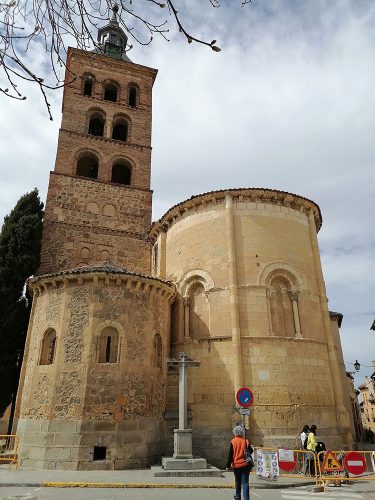
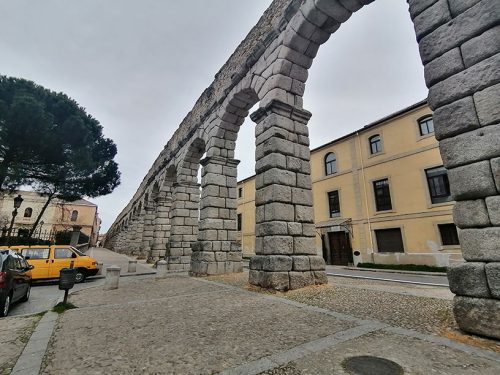
Segovia has a rich architectural legacy, including medieval walls, Romanesque churches, a Roman Aqueduct, a former royal palace, and a Gothic Cathedral. We started our tour by going to the Roman Aqueduct, and on the way, we saw the Church of el Salvador and the Church of Saints Justo and Pastor. The Roman Aqueduct built in the 2nd century, with 28 meters high and with 167 arches, most of them in dry joint granite, rises above the Azoguejo Square in the centre of the city, and is the most impressive thing in Segovia, at least for us!








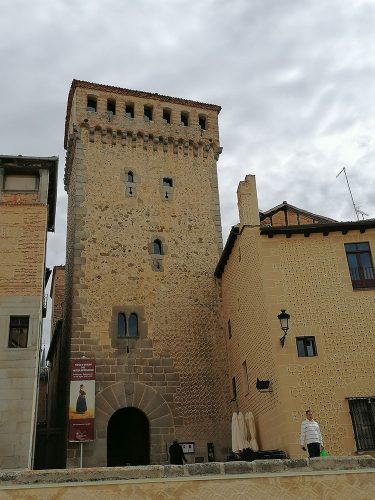
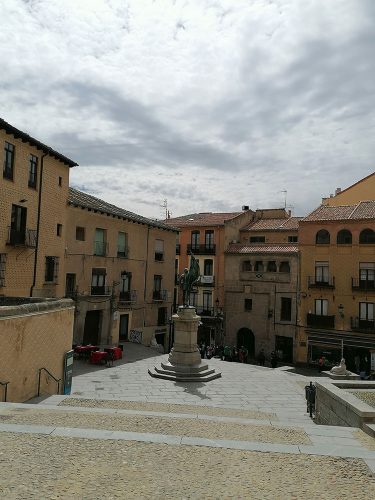
We went through the Old Town full of taverns, restaurants and shops, but also buildings with typical Segovian seraphic facades and we found the Cubes House, a building erected in the 16th century that owes its name to the peculiar cubes that decorate its entire facade. It currently houses the headquarters of an Art School and it is possible to visit its beautiful Renaissance courtyard. And from there we arrived at Medina del Campo Square surrounded by important historical buildings such as the beautiful Church of St Martin, of Mozarabic origin and Romanesque style, the Lozoya Turret and several Renaissance mansions from the 16th century.


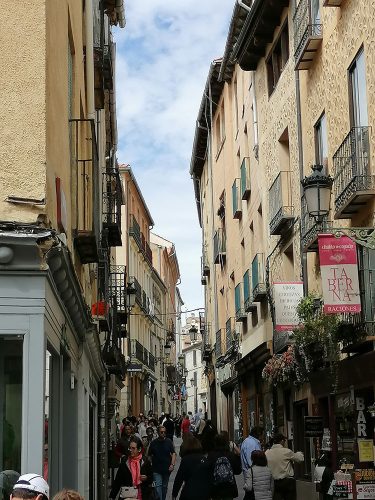
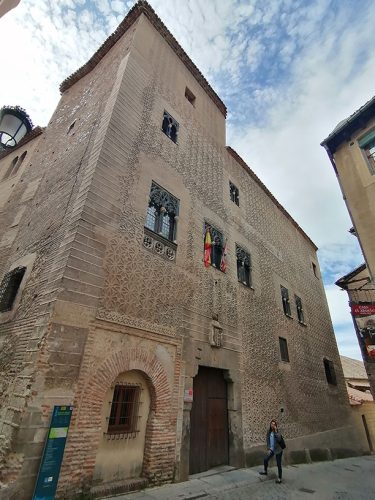

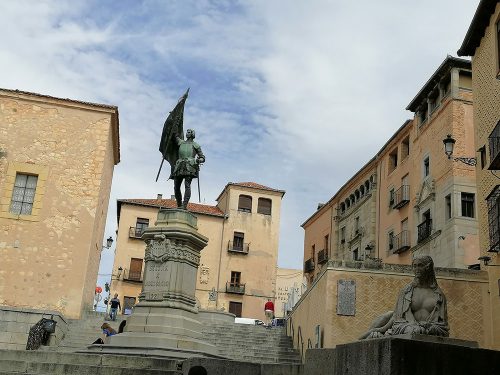

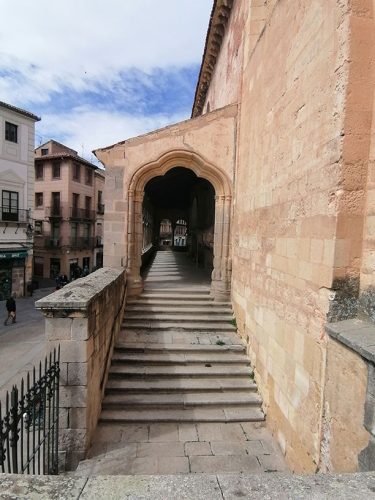

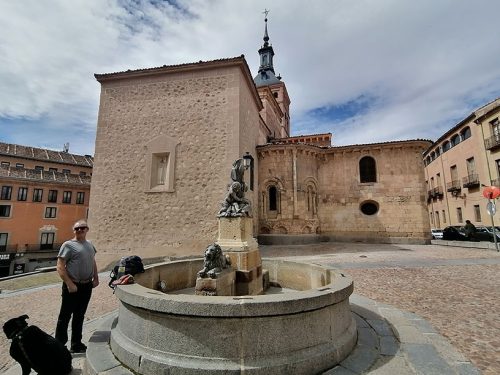

Next we went to the Mayor Square of Segovia, the cultural and economic epicentre of the city. The current appearance of the square dates back to the 17th century, the new Town Hall presides over the square, while the church of St Miguel, located two centuries ago in the middle of the square (where Isabel La Catolica was proclaimed Queen of Castille), is now located on one of the sides. In the square, you can find also the Juan Bravo Theater from the 20th century.


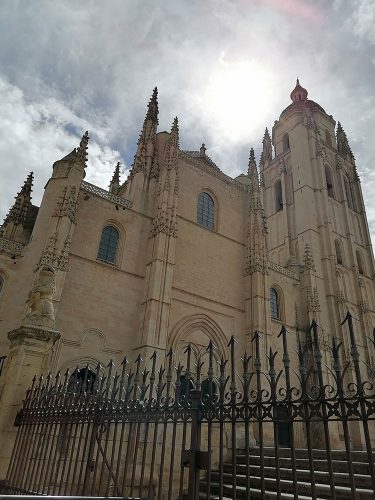
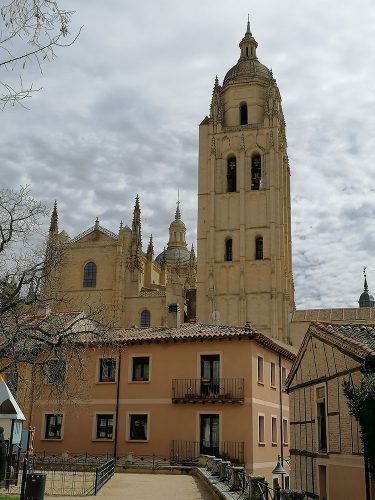
Very near to the Mayor Square, you find the Segovia Cathedral considered one of the best examples of Gothic art in the entire country, its construction dates back to the 16th century, when the old Cathedral of Santa Maria de Segovia was destroyed. It impresses with its 88-meter-high tower and its precious apse, with some beautiful pinnacles.




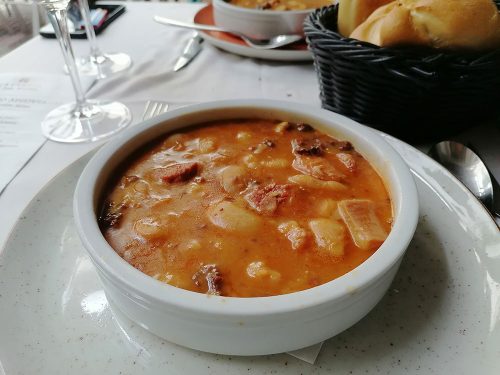
We decided to have lunch in a restaurant called La Casona de San Martín in San Martin little square because we like it, with a patio inside where we could have our dog Asha with us and we could smoke. We ate the typical Segovian menu that includes: for starter large beans in the Segovian style which has chorizo and bacon, for second the famous piglet with potatoes and amazing salsa, bread, dessert and wine. Before that, they gave us a free tapa of rashers, yummy! If you came to Segovia we recommend having lunch here as the food is really good, not expensive and the staff are very nice!




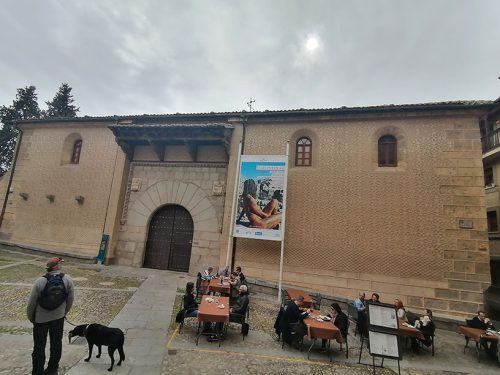
After lunch, we went to visit the Jewish Quarter where we saw the Merced Square and the Church of St Andrew from the 12th century. And last we saw the Alhondiga from the 16th century, which was the city grain storage, which coat of arms is repeated in the facade and where the Municipal Historical Archive is currently located inside.



And we finished our visit to Segovia by going back to the Roman Aqueduct.


The next day we went to Quintana Redonda, a town in the Soria region east of Castilla y León, and you can see this in the next post!


Hi both,
Love all you saw. ?
See you tomorrow! Cannot wait!
Love, Marian