Wales – Devil’s Bridge (En)
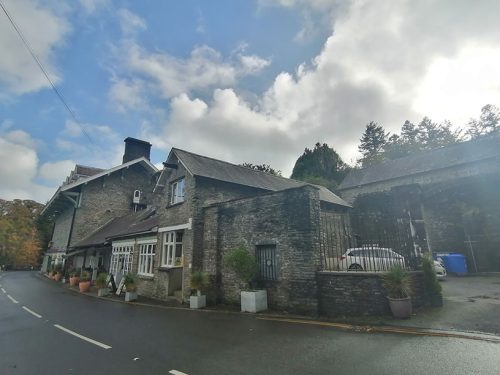
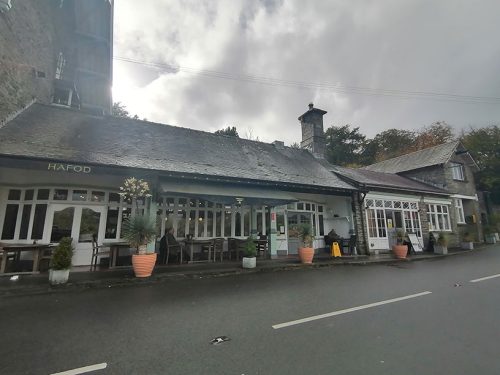
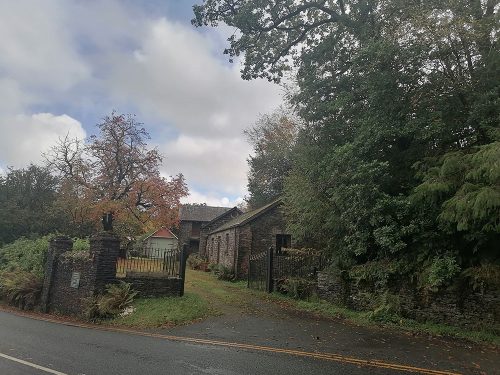
Devil’s Bridge village, known in Welsh as Pontarfynach, has been a tourist attraction for over 100 years, but it retains its heritage and is a beautiful, unspoilt part of mid-Wales. It has remained largely unchanged since the late 18th century when the Hafod Hotel and the third bridge over the River Mynach were built.

Where to stay
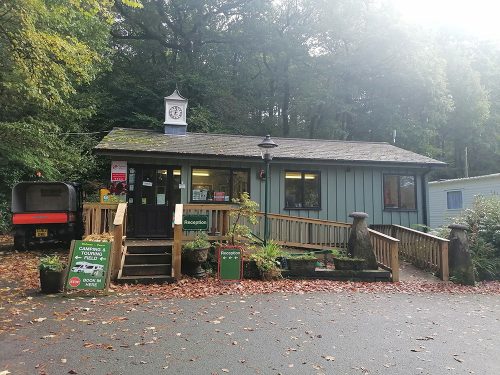
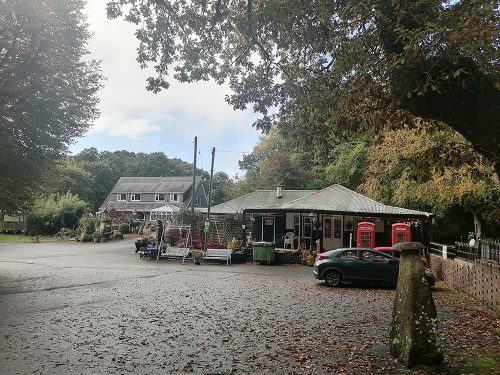
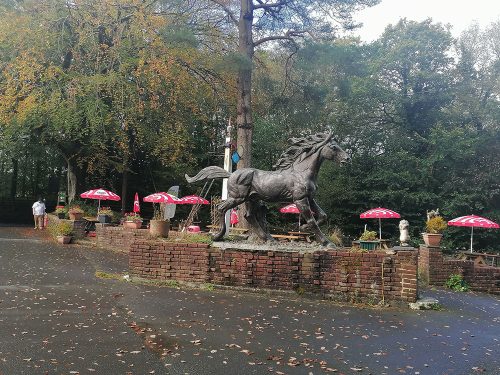
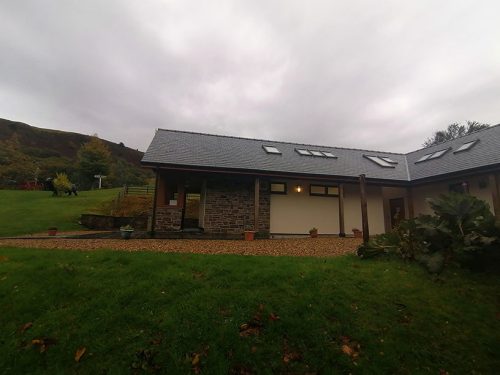
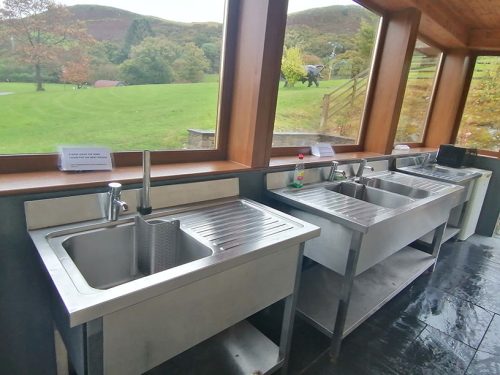
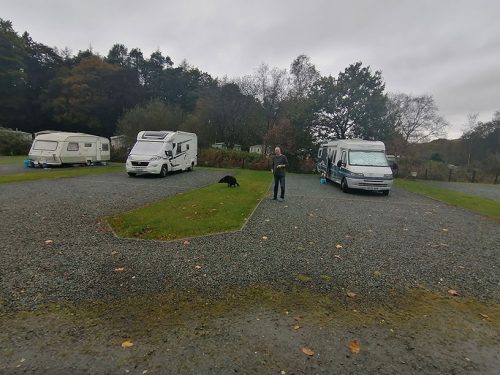
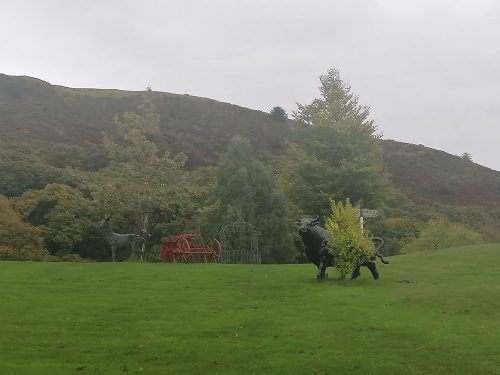
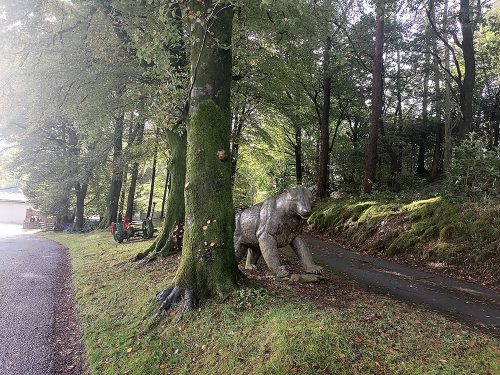
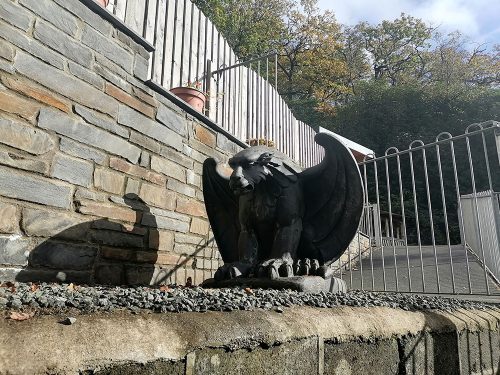
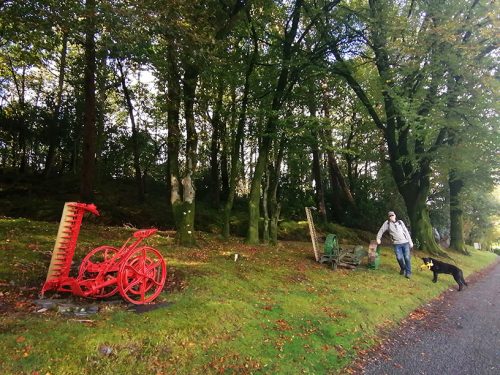
We stayed at Woodlands Camping (52.378599, -3.845865), a short walk from the village and the waterfalls. The campsite is in a very nice location with animal sculptures around the campsite. The facilities are good with good hot water in the showers. Easy to empty and fill water and rubbish. The pitches are large with electricity. They no longer accept ACSI, we thought it would be £23 a day with electricity but they charged us £2 for Asha! So in the end we paid £25 a day including electricity. It has a restaurant open until 3 pm where you can have a full English breakfast for a very cheap price. The good thing about the campsite is that in a 5-minute walk, you are at the Devil’s Bridge waterfalls!

What to see
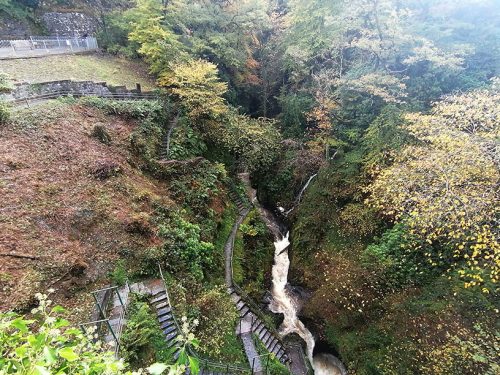
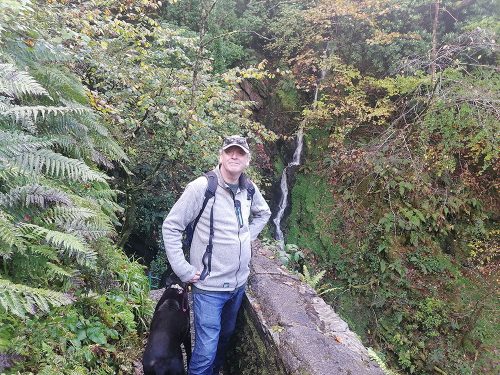
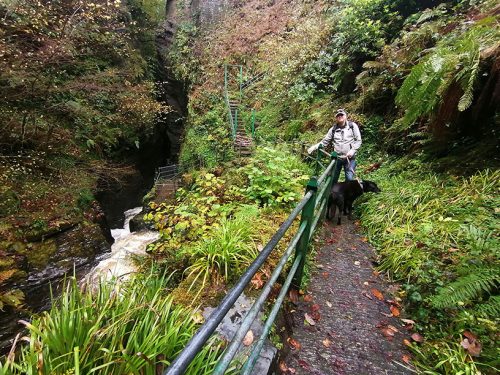
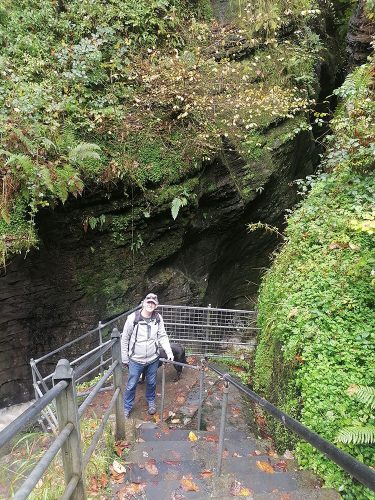
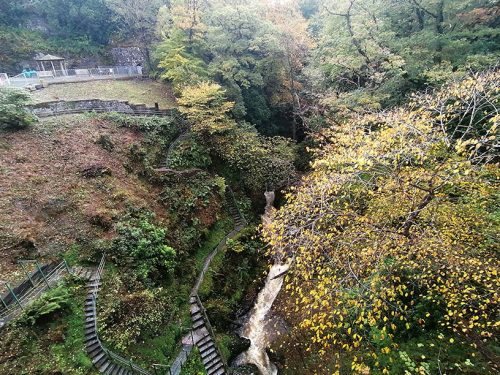
There are two routes to take around the falls. The Punchbowl and Three Bridges walk with 220 steps leading down the falls to the bottom and the Nature Walk with 675 steep, uneven natural stone steps which takes you through ancient oak woodland deep into the Rheidol Gorge. We were told that Asha would not be able to do the difficult walk with so many steps so we did the Punchbowl and Three Bridges walk which has 220 steps and we chose well by the time we were climbing back up the steps Asha was already tired!
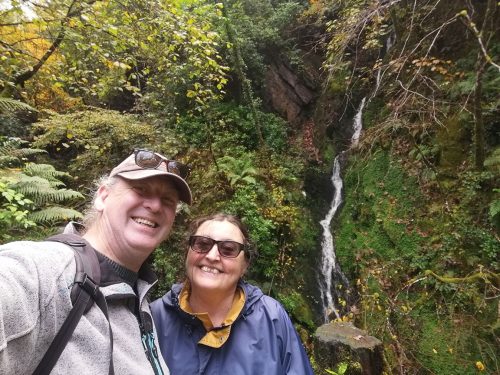
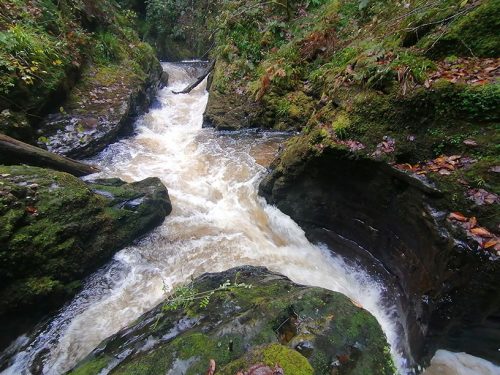
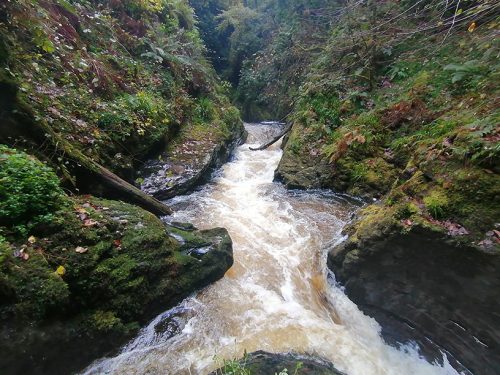
The Punchbowl and Three Bridges walk takes you down 220 steps where you can see how the force of the Mynach River has carved large, beautiful holes in the rock, creating the ‘Punchbowl’.
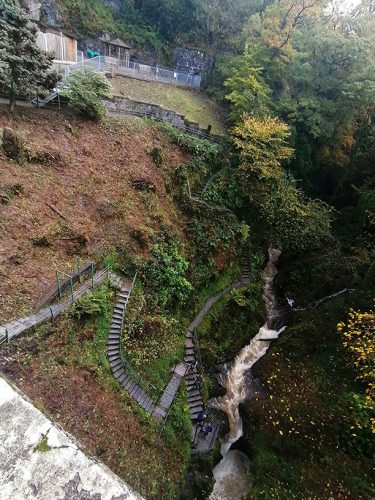
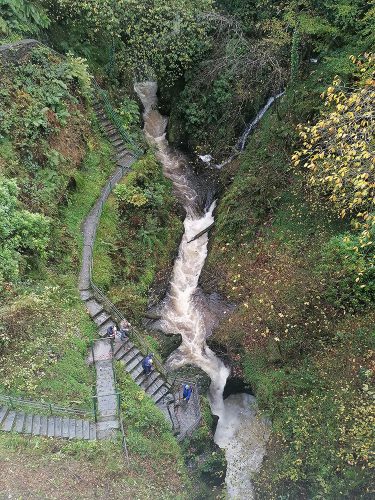
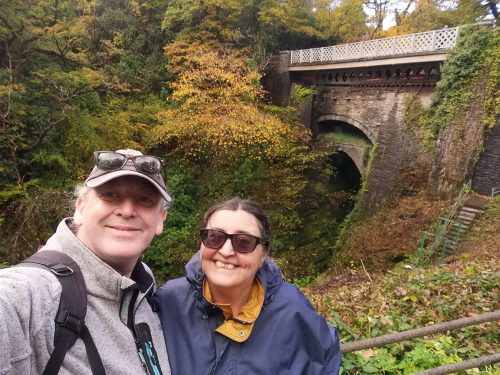
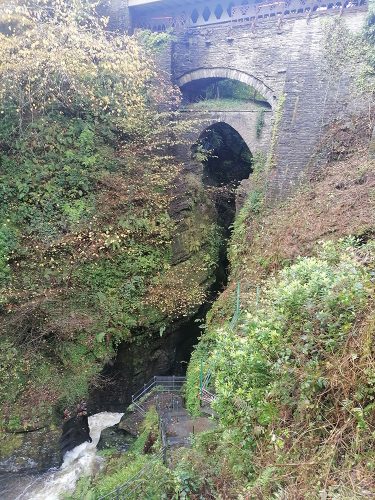
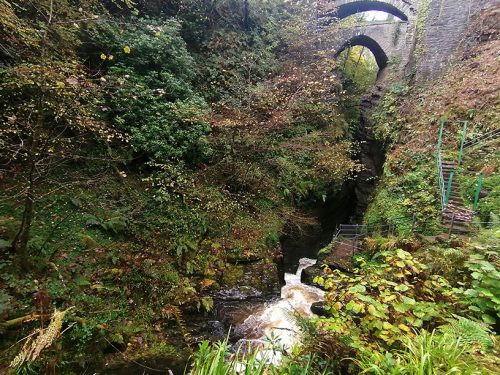

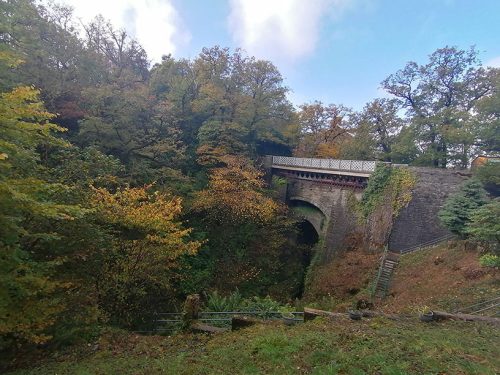
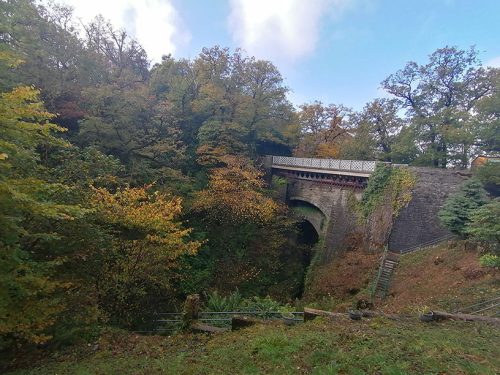
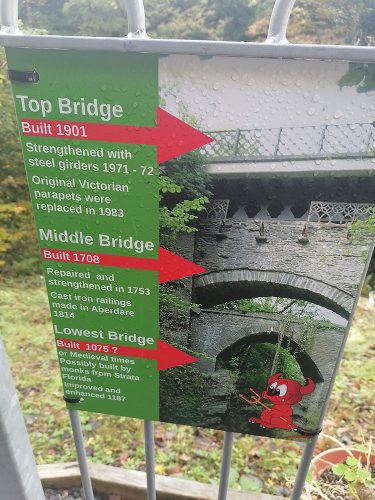
Above is a viewing platform from which the Three Bridges, built one above the other, offer a stunning view. The upper bridge was built in 1901, and reinforced with steel girders. The original Victorian parapets were replaced in 1983. The middle bridge was built in 1708 and the lower bridge is believed to have been built in 1075 or in medieval times by the monks of Strata Abbey and improved in 1187. On display is a selection of old postcards and photographs and a section of the original Victorian balustrade dating from 1901.

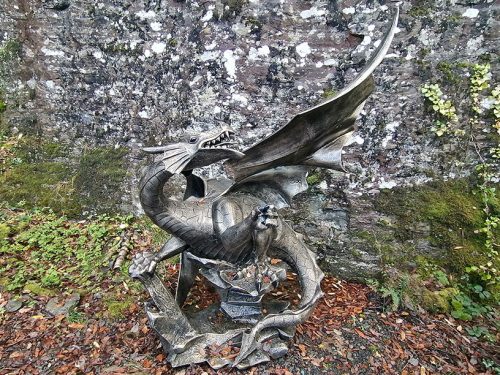
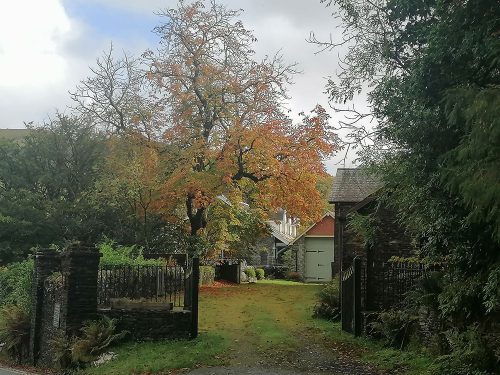
Then we went to see the village, which only has the late 18th-century Hafod Hotel, the train station and a cake shop.
Our next stop is Aberystwyth, a beautiful university and coastal town with thousands of years of history, which you can read about in the next blog!

