Spain – Merida Part II (En)
In this second part, we explored the rest of Mérida, where we visited beautiful places such as the square where the Co-cathedral of St. Mary and the town hall are located, the Roman bridge, the citadel with incredible views and the Temple of Diana, among others.


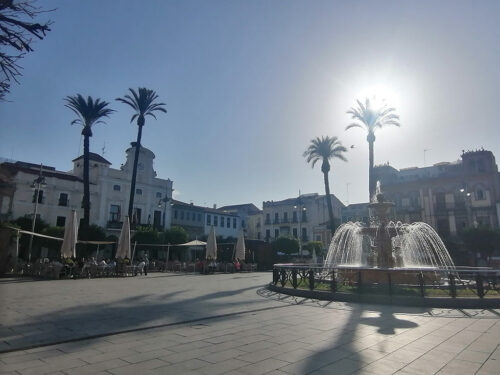
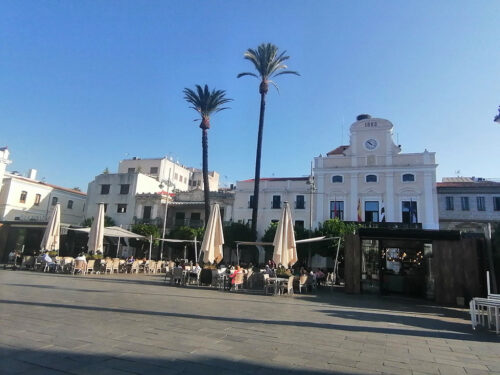
We arrived at the square where the Co-cathedral of St. Mary is located, a rather unique building made of red brick with a white bell tower on top. We were able to go inside and see the interior. The square is very nice, with a fountain in the centre, bars with terraces, and surrounded by imposing buildings such as the City Hall, where it is announced that the Archaeological Ensemble of Mérida has been declared a World Heritage Site by UNESCO.


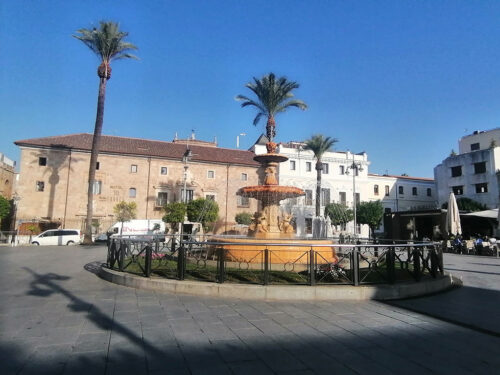

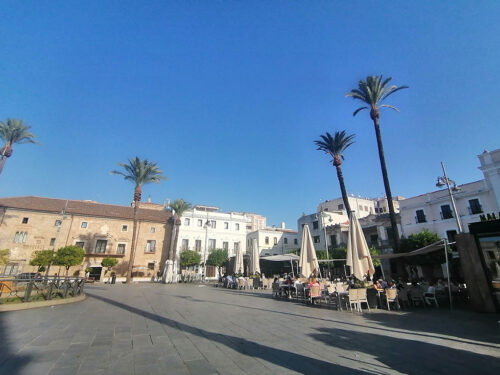


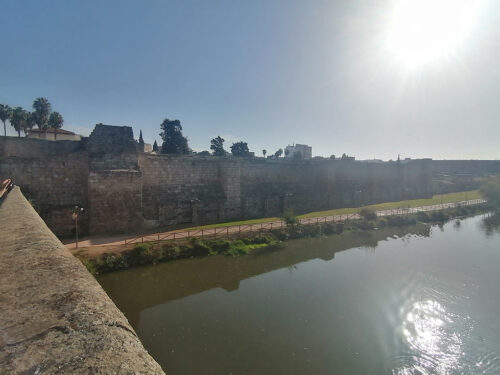
From the square, we headed towards the river and passed by the Convent of the Order of Santiago, which moved from León to Mérida in 1563 and built its buildings on part of the Moorish citadel. When we arrived, the security guard told us it wasn’t open to the public until later, but he was kind enough to let us see the courtyard with its Moorish arcades. This building now houses the Presidency of the Regional Government of Extremadura and is located in the well-known Market Square, named after the traditional market that was held there from the 15th century. At the far end of Market Square is the citadel, which requires an entrance fee. I slipped in through the gate and took some photos of the ruins.


Directly opposite the entrance to the Citadel is the Roman Bridge, which provided access to one of the four main gates of the Roman city located behind it. This gate was demolished when the Citadel was built. The bridge is 762 meters long and originally had 60 arches. The Roman-era structure remains intact at its ends. In front of the bridge is a statue of the she-wolf with Romulus and Remus, known as the Capitoline Wolf.





We wandered through the streets until we reached the Temple of Diana, which I consider one of the most beautiful monuments in the city. The temple was built in the second half of the 1st century AD, and its imposing marble portico is a striking feature.


We finished our tour by passing through the shops that sell typical souvenirs from the Roman era, where I took a picture of Ben dressed as a gladiator, which is priceless, hahaha.


We left Mérida that afternoon and went to Monesterio, a town that in Roman times was the gateway to Extremadura from the south, and was founded by the Templars, and is famous for its Ham Museum, which you will be able to see in the next blog!

